 My Psico Agenda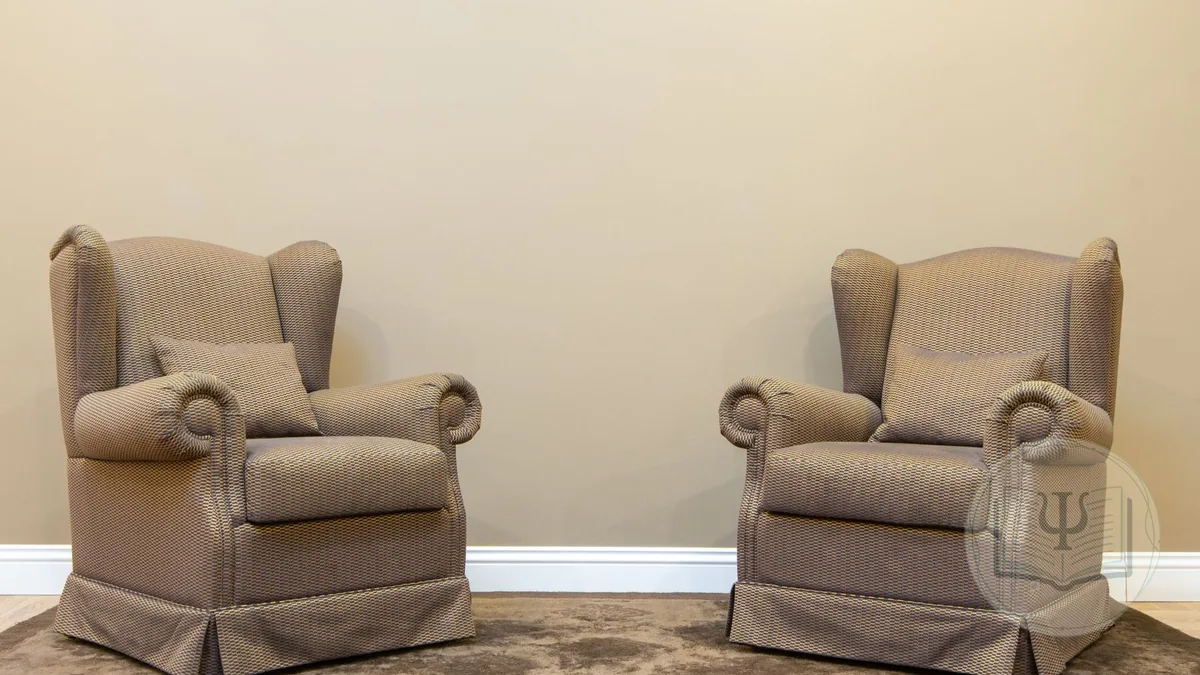
There's a line that captures it well: «don't chase the river; sit on its bank and listen to it». Gestalt therapy proposes something similar —stop pushing and start noticing— and that is why it puzzles anyone who arrives expecting advice and homework. It is one of the great currents of humanistic psychotherapy, with a way of working all its own: the present before the past, experience before explanation. This guide covers what it is, what it rests on, which techniques it uses and what it's for — whether you work in psychology or you are thinking of trying it.
One note before we start: this is an overview to understand the approach, not a self-help manual. Gestalt therapy is practised by professionals with specific training —the kind gathered by bodies such as the European Association for Gestalt Therapy—, and its value lies precisely in how it adapts to each person in each session.
What Gestalt therapy is
Gestalt therapy is a humanistic form of psychotherapy born in the mid-20th century through Fritz Perls, Laura Perls and Paul Goodman. It draws on several sources —the psychoanalysis Perls came from, Gestalt psychology, existentialism and phenomenology— and combines them into an idea that is simple to state and hard to practise: what matters is not so much understanding why what happens to us happens, but becoming aware of how we live it here and now.
The German word «Gestalt» means something like «form» or «whole figure», and it points to one of its core beliefs: the person is a whole —body, emotion, thought and environment— not a sum of separate parts. The American Psychological Association places it among the experiential approaches, the ones that work with what happens in direct experience rather than with the story told about it. That is why a session of Gestalt therapy looks little like an ordinary conversation.
The principles of Gestalt therapy
To follow the thread of Gestalt therapy it helps to keep a few core ideas at hand.
The first is the here and now: the work happens in the present, with whatever shows up in the room, even when the topic is something old. The second is awareness —noticing what you feel and do in each moment— because that noticing is transformative in itself. The third is responsibility: moving from «it happens to me» to «I do», recovering the power to choose. And the fourth is contact, the way we relate to what surrounds us and to other people.
From there come two very Gestalt notions. One is figure and ground: at each instant something stands out from the rest —an emotion, a need— and the therapy helps you see which figure is asking for attention. The other is unfinished business, those «incomplete gestalts» —a goodbye that never happened, anger that was never voiced— that keep tugging at us from behind until they are closed.
Gestalt therapy techniques
Gestalt therapy is famous for its active techniques, closer to the experiment than to the chat. Here are some of the most recognisable.
The empty chair
The empty chair is its signature technique. The person speaks to a chair in which they imagine someone significant —or a part of themselves— and says what they haven't been able to say. Placed in the present, what was stuck starts to move: goodbyes get closed, stored-up anger or grief comes out, you hear yourself from a different place. It is not theatre; it is bringing into the now something that was still pending.
The awareness continuum
The therapist invites you to narrate what you feel moment by moment —«now I notice my stomach tightening», «now I realise I'm avoiding your eyes»—. That awareness continuum trains the noticing and brings to light what we usually skip over.
Experiments
Instead of talking about something, Gestalt suggests trying it out in the session: exaggerating a gesture, repeating a phrase, staying with an emotion instead of escaping it. They are tailor-made experiments, designed so the person discovers for themselves, not to prove anything to them.
Working with dreams
In Gestalt therapy the dream is not «interpreted» in the classic way: the person is invited to give a voice to each element of the dream as if it were a part of themselves. The dream stops being a riddle and becomes living material for awareness.
What Gestalt therapy is for
Gestalt therapy fits especially well when what weighs on someone has to do with emotion, relationships and the way they inhabit their own life. It is used for anxiety, low self-esteem, emotional blocks, relationship difficulties, grief and those unfinished matters people carry without quite letting go. And it is a much-chosen path for those seeking self-knowledge and personal growth, without a specific «problem» to solve.
It is worth saying honestly: it is not a cure-all. In severe conditions —a psychotic episode, a serious mental disorder— the first line is specialised care and, when appropriate, medical treatment; there an experiential approach can accompany, but not replace. As professional bodies devoted to humanistic psychology remind us, the key is a well-trained professional who knows when their approach helps and when to refer or combine. Gestalt therapy also pairs well with other tools, such as emotional regulation or mindfulness, with which it shares that attention to the present.
What a Gestalt therapy session looks like
A Gestalt therapy session looks little like the image of the patient talking while the therapist takes notes in silence. Here the therapist is very present: they accompany, they propose, they sometimes reflect back what they observe in the body or the tone, and above all they tend to the contact —the real relationship created in the room is, in itself, working ground. The focus is less on the «why» and more on the «how» and «what do I do with this now».
That relationship is the heart of the process; that is why Gestalt takes such care of the therapeutic alliance. Sessions are usually weekly or fortnightly, and they do not follow a closed script: you work with what the person brings that day, following the figure that emerges. It can feel intense, because it touches emotion live, but it also frees precisely for that reason.
Supporting Gestalt therapy processes in your practice
Working from Gestalt therapy is a craft of presence: it asks you to be fully with the person in front of you, not with your head in the paperwork. And there the practice's logistics, if unresolved, get in the way. Fitting sustained weekly sessions together, avoiding no-shows, having each process's progress to hand without getting lost in folders: none of that is therapy, but it shapes therapy.
That is why it helps to lean on clinical management software. You can leave sessions scheduled as recurring appointments with automatic reminders, and record the thread of each process —the matters that come up, the experiments that worked— in an encrypted digital clinical record. The less energy the admin takes, the more you have left for what really counts: being, truly, in the here and now with your patient.
My Psico Agenda: the logistics sorted so you can be present
Supporting experiential processes like those of Gestalt therapy calls for presence and continuity; the less paperwork, the better. My Psico Agenda is a clinical management software that brings the calendar, the encrypted clinical record, WhatsApp reminders, the patient portal and VeriFactu invoicing together in a single account, in the browser, on mobile and tablet, complying with GDPR on servers in the European Union, and it treats in-person and online sessions alike.
It starts at €19.99/month with no lock-in if you work on your own with the calendar for self-employed psychologists, and if you are part of a team or run a center, the version for psychology practices brings several calendars, with their reports, into one dashboard.
Frequently asked questions about Gestalt therapy
The questions that come up most about Gestalt therapy.
What is Gestalt therapy?
It is a humanistic form of psychotherapy that focuses on the present —the here and now— and on awareness: noticing what you feel, think and do at each moment. Instead of digging for the 'why' of problems in the past, it works on how the present is lived, and it sees the person as a whole (body, emotion and environment), not as a sum of symptoms.
What is Gestalt therapy used for?
It helps with difficulties such as anxiety, low self-esteem, emotional blocks, relationship problems, grief and the unfinished business people carry around. And it is a widely chosen path for self-knowledge and personal growth. It does not replace medical treatment in severe conditions, where it is combined with the specialised care that applies.
What is the empty chair technique?
It is the best-known technique in Gestalt therapy. The person speaks to an empty chair, imagining that someone significant —or a part of themselves— is in it, and says what they have not been able to say. It helps close unfinished business, release held-back emotions and see oneself from another angle. It is not role-play for its own sake: it brings something stuck into the present.
How is it different from cognitive behavioral therapy?
Cognitive behavioral therapy works mainly on thoughts and behaviours with a structured plan and concrete goals. Gestalt therapy is experiential: it centres on present-moment awareness, on emotion and on contact, and gives great weight to what happens in the session itself. They are different approaches, both valid, and the choice depends on the person and the goal.
How long does Gestalt therapy last?
There is no fixed duration. It can be a brief process focused on one specific difficulty or a longer journey of self-knowledge. It is usually worked in weekly or fortnightly sessions, and the total length depends on each person's goals and how the process moves along, something reviewed with the therapist.
Does Gestalt therapy have scientific evidence?
There is research supporting humanistic and experiential therapies, although with fewer trials than cognitive behavioral therapy. Several of its techniques, such as two-chair work, have been studied and integrated into well-supported approaches like emotion-focused therapy. As in any therapy, the professional's training and the bond with the patient weigh heavily on the outcome.