 My Psico Agenda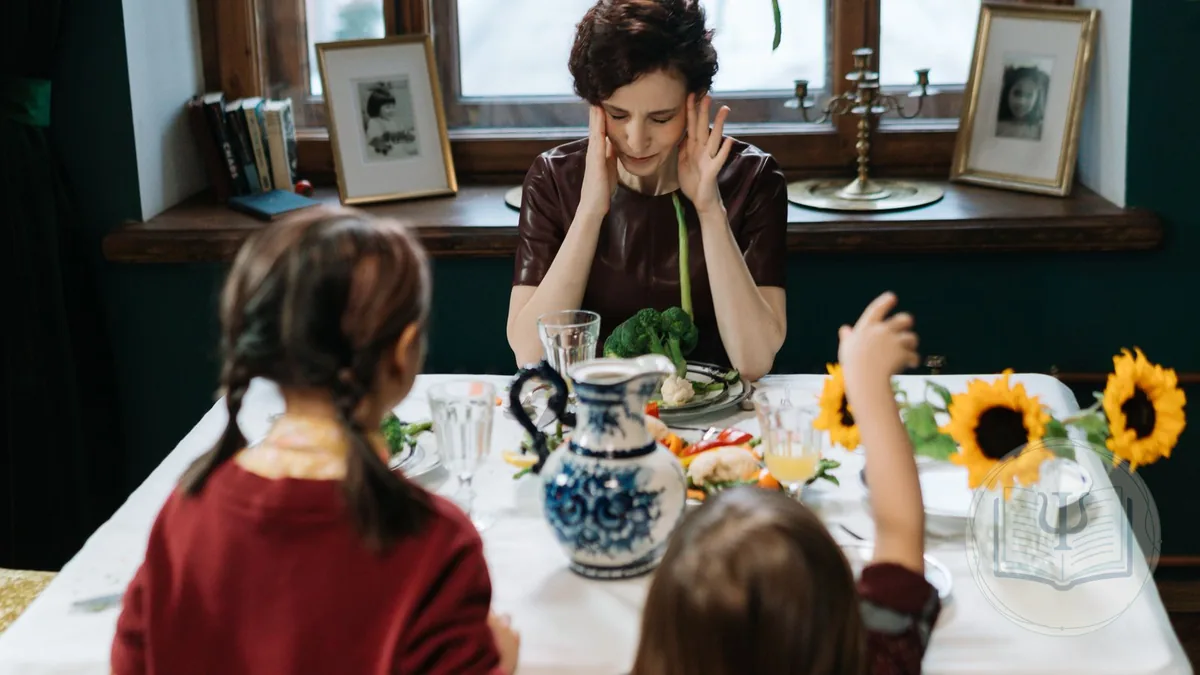
Elena is 38 and for months now she has been eating dinner alone in the kitchen, ten minutes before her daughters. She says she can't stand the noise her youngest makes when she chews: mouth open, the click of the tongue, the fork against the plate. When she hears it, a wave of heat climbs up her neck and she feels an urge to shout that frightens her, and then comes the guilt, because this is her daughter. At the office she wears headphones with no music so she doesn't have to hear the colleague who clicks his pen. She remembers leaving the table at 12 whenever her father slurped his soup. What she has has a name, misophonia, and it can be worked on in therapy.
This guide is written for psychologists and therapists who come across misophonia in their practice, often hidden behind another complaint ("I argue a lot with my partner", "I have a short temper"), and also for patients and families looking for reliable information. It covers what it is, how to recognise it, what it gets confused with, how it is assessed and what we know today about treating it.
What misophonia is
Misophonia is a reduced tolerance to specific sounds, or to stimuli associated with those sounds, which trigger an emotional, physical and behavioural reaction far stronger than in most people. The term was coined by Pawel and Margaret Jastreboff in the early 2000s and, for almost twenty years, each research group defined it in its own way.
In 2022 a committee of fifteen researchers and clinicians from different disciplines published a consensus definition of misophonia, built with the Delphi method from the published literature. According to that definition, the stimuli that set it off (the "triggers") feel unpleasant or distressing, tend to be repetitive and are mostly produced by another person, especially by the human body. Once the person picks up the sound, they find it very hard to pull their attention away from it.
Misophonia is not yet a diagnosis in its own right in either the DSM-5-TR or the ICD-11. The Duke Center for Misophonia and Emotion Regulation reports that a workgroup of people with lived experience, families, scientists and clinicians has proposed adding it to the ICD-11 as a new diagnostic code. In the meantime, clinicians work with the consensus definition and with specific scales.
Symptoms of misophonia
The symptoms have two parts: which sounds trigger it and what happens to the person when they hear them. Severity ranges from mild to very disabling, and some people realise their reaction is out of proportion while others don't.
The sounds that trigger misophonia
Each person has their own list, but some come up again and again. According to the consensus definition, the most common are:
- Mouth sounds: chewing, eating, lip smacking, slurping, coughing, throat clearing or swallowing.
- Nasal sounds: heavy breathing or sniffing.
- Other sounds made by people: pen clicking, typing, finger or foot tapping, shuffling footsteps.
- Objects and animals: a ticking clock or some animal sounds.
- Visual triggers: seeing someone crack their knuckles, jiggle their leg or eat, even without hearing it.
How strong the reaction is depends on the context, how much control the person feels they have over the sound and who is making it. Many patients say that a stranger on the bus is hard enough, but that their mother, partner or children are much worse. The family table is often where the problem first shows up.
What someone with misophonia feels
The most common emotions are anger, irritation, disgust and anxiety, and some people feel rage. The body gets activated: muscle tension, a racing heart, sweating. Behaviours appear too, all aimed at getting rid of the sound:
- Avoiding or escaping situations where the trigger appears: eating before everyone else, leaving class, changing carriages.
- Asking the other person to stop, sometimes not very kindly.
- Mimicking or repeating the sound, a behaviour that surprises families and that the consensus definition mentions explicitly.
- Agitation or aggression aimed at whoever is making the noise. Verbal or physical outbursts are rare and are seen more in children than in adults.
The result is a wear and tear that goes beyond the moment itself: trouble concentrating at work or school, arguments at home and, in severe cases, social isolation. Many people describe, like Elena, the guilt of feeling this way about someone they love.
When misophonia starts
Symptoms usually appear for the first time in childhood or early adolescence. In the study by Schröder, Vulink and Denys (2013) of 42 Dutch patients, the mean age of onset was 13, with cases starting anywhere between 2 and 38. In all of them the triggers were sounds made by people, and the sounds they made themselves didn't bother them.
Misophonia, hyperacusis and other conditions
Misophonia can occur with normal hearing or with hearing loss, and it can appear on its own or alongside tinnitus or hyperacusis. It's worth telling them apart:
- Hyperacusis. Sounds feel too loud or painful because of their volume. In misophonia what bothers the person is one specific sound, even a quiet one.
- Obsessive-compulsive disorder. Attention glued to the sound and avoidance behaviours can look like OCD, but in misophonia there are no obsessions and no rituals to neutralise them. If in doubt, our article on OCD treatment sets out the criteria.
- Anxiety, mood and personality disorders, PTSD, autism spectrum disorder and ADHD. The consensus definition lists them as conditions that can co-occur with misophonia. Sensory sensitivity in autism, for example, can affect many kinds of stimuli (lights, textures, noise in general) and not just sounds made by people.
The practical rule is the same as with other conditions: the symptoms of misophonia shouldn't be better explained by another disorder the person already has. And if there is tinnitus, discomfort with volume or any doubt about hearing, it's worth referring to ENT or audiology before you start.
How misophonia is assessed in practice
There is no medical test that detects it. The assessment is clinical and relies on the interview, on scales and on a record of what happens between sessions.
The interview
Ask about each trigger sound, who makes it and where, how long it has been happening, what the person feels in their body and what they do next. Ask too about what they have stopped doing: family meals, classes, working in a shared office, travelling by public transport. And ask about the relationship with the people who make the sounds: misophonia tends to damage precisely the closest relationships.
Scales to measure misophonia
The most widely used is the Amsterdam Misophonia Scale (A-MISO-S), adapted by the Amsterdam group in 2013 from the Y-BOCS used for OCD. It has six questions: time spent on misophonia, interference with social life, level of anger, resistance to the impulse, control over thoughts and anger, and time spent avoiding situations. Scores range from 0 to 24: 0 to 4, subclinical symptoms; 5 to 9, mild; 10 to 14, moderate; 15 to 19, severe; and 20 to 24, extreme. There is a revised version, the AMISOS-R, which is the one used in the first clinical treatment trial.
Self-monitoring of triggers
For two or three weeks the patient writes down every episode: the sound, the person, the place, the level of distress from 0 to 10 and what they did. Elena found that from Monday to Friday the problem was concentrated in two moments, dinner and meetings with one particular colleague, and that at weekends, eating out, she hardly had any episodes.
Psychological treatment of misophonia
Research into the treatment of misophonia is recent and there are still few treatments with solid empirical support. The consensus definition itself acknowledges that, while each group used different criteria, the effectiveness of treatments couldn't be properly compared. Even so, there is data now.
The first randomised clinical trial of cognitive behavioural therapy for misophonia (Jager and colleagues, published in December 2020 in Depression and Anxiety) included 54 patients. Some received three months of group cognitive behavioural therapy and the rest stayed on a waiting list. Symptoms measured with the AMISOS-R fell significantly in the therapy group; 37% improved to a clinically meaningful degree, against 0% on the waiting list, and the effect held at one year. The same team had already tested the treatment in an open study with 90 patients, in which 48% improved after eight sessions.
Cognitive behavioural therapy techniques for misophonia
The protocol in that trial, eight sessions long, combined psychotherapy with psychomotor therapy and had four components. Their names give a fairly clear idea of how to work on misophonia in individual therapy too:
- Task concentration exercises. Training attention to return to what the person is doing when the sound appears, instead of getting stuck on it.
- Arousal reduction. Relaxation and other techniques to bring down the physical tension the sound triggers before it turns into anger.
- Positive affect labelling, so that the sound and the person making it are not tied only to distress.
- Stimulus manipulation, so that the patient gains a sense of control over the trigger, one of the factors that most affects how strong the reaction is, according to the consensus definition.
The protocol added two more elements: re-evaluating the patient's rules about how people should eat, and stress reduction. On top of that comes work on the main emotion, which is usually anger; our article on anger management has techniques that fit well here. Earplugs and noise-cancelling headphones bring short-term relief, but if they are used for everything they can keep avoidance going; it's better to agree with the patient when to use them and when not to.
Misophonia in the family and in couples
Because the most bothersome sounds usually come from the people closest to the patient, family or partners almost always end up involved in treatment. In the Amsterdam trial, relatives and friends attended one psychoeducation session and another to practise the techniques together. Some guidelines that help at home:
- Explain what misophonia is in a joint session. Knowing it has a name and isn't a whim takes a lot of tension out of the house.
- Agree on concrete, temporary changes, such as soft music at dinner or eating together on only a few days at first, rather than rules nobody keeps.
- Don't make fun of it or make the sound on purpose to "get them used to it". Exposure is graded in therapy, not sprung by surprise.
- Agree on a calm way to ask for a change ("could you chew with your mouth closed?") and a dignified way out when the person needs to leave the table.
Elena had two sessions with her partner and one with her daughters. They agreed to have dinner together three nights a week with the radio on and to build up from there.
Misophonia in children and teenagers
Because it usually starts in childhood or early adolescence, many cases reach therapy through parents, who describe tantrums "for no reason" at the table or in class. Verbal or physical outbursts are more common in children, so it's important to work with the parents from the start and, if needed, to coordinate with the school, for example to agree on a seat in class away from a classmate who taps their pencil.
How to document misophonia follow-up
Patients tend to judge their progress by the last episode, which may have been bad even if things have improved overall. That's why it helps to keep a written record of:
- The A-MISO-S score at the start and at each review, with its date.
- The list of triggers ranked by distress and where the patient is in the exposure work.
- The weekly summary of the self-monitoring: number of episodes, average intensity, situations avoided.
- Functional goals ("having dinner with the family three nights a week", "going back to the shared office").
- What was agreed with the family, partner or school and, if there was a referral to audiology, the outcome.
Going over this data with the patient every few weeks shows them the improvement they don't notice day to day.
Misophonia in your practice with My Psico Agenda
My Psico Agenda doesn't assess or treat anyone: that's your job. What it does is organise everything around a treatment like this one:
- The clinical record, session by session. In each session's private notes you log the A-MISO-S score, where the patient is in the exposure work and what was agreed at home, and you can see the progress without digging through paper.
- Your own fields in the record. Under "Additional data" you add the fields you need, such as "Trigger sounds", "Baseline A-MISO-S" or "Audiology referral". If you work in a centre, the centre can also add its own "Centre fields", shared across all its therapists' records.
- Self-monitoring in the patient's hands. You upload the template to "Patient files". It goes up as "Hidden"; when you switch it to "Visible", the patient finds it in their space under the "Documents" tab, and in the record you see "Seen" with the date they opened it.
- Sessions with the partner. If you work with both, the "Couples therapy?" option creates a record for the two people, each with their own name, and both of them sign the consent.
- The minor's record, with their guardians. The "Minor patient?" option stores "Guardian 1" and, if there is one, "Guardian 2", and the informed consent can be signed by the guardians with their own link or on your device.
- The details, before the first session. With "Send form to the patient" you send them a link so they can fill in their details on their phone and, if you turn it on, sign the consent on that same page.
- A fixed slot every week. With "Recurring therapy" you book the patient's slot, and they get a WhatsApp reminder 24 hours before with buttons to confirm or cancel.
- Consistency, in numbers. In each patient's statistics you see "Total sessions", "Attendance" and "Cadence", useful when you start spacing out sessions towards the end of treatment.
There are plans for therapists from €4.99/month + VAT and for centres from €99.99/month + VAT, and you can try it free for 1 month, no card needed and no lock-in. Our software for psychologists page has everything that's included.
Frequently asked questions
The questions that come up most often about misophonia, in therapy and outside it.
What is misophonia?
It is a reduced tolerance to specific sounds, such as chewing, breathing or pen clicking, which trigger a reaction of anger, irritation, disgust or anxiety much stronger than in most people. What sets it off is not the volume but the kind of sound and what it means to the person. It usually starts in childhood or early adolescence.
Is misophonia a mental disorder?
It isn't yet a diagnosis in its own right in the DSM-5-TR or the ICD-11, although it has been proposed for the ICD-11. There is a consensus definition published in 2022 by an international committee of experts, and it can cause distress and problems in daily life as serious as those of other disorders.
Which sounds bother people with misophonia the most?
Mouth sounds, such as chewing, slurping, lip smacking, coughing, throat clearing or swallowing, and nasal sounds, such as heavy breathing. Pen clicking, typing, finger tapping and shuffling footsteps are also common, and there are visual triggers too, such as seeing someone jiggle their leg or eat.
Can misophonia be cured?
It can be treated. In the first randomised clinical trial, three months of group cognitive behavioural therapy reduced symptoms significantly: 37% of patients improved to a clinically meaningful degree, against 0% on the waiting list, and the effect held at one year. The research is recent, so treatment is tailored to each case.
What is the difference between misophonia and hyperacusis?
In hyperacusis, sounds bother or hurt because of their volume. In misophonia, one specific sound is the problem even when it's quiet, such as someone chewing, and the main reaction is emotional: anger, irritation or disgust. Both can occur together, and in that case it's worth having an audiology specialist assess the person too.
Do earplugs or noise-cancelling headphones help?
They bring short-term relief and can be useful at specific times, such as an exam or a journey. But if they are used in every situation they keep avoidance going and the problem doesn't improve. It's best to agree with the therapist when to use them while misophonia is worked on in therapy.
How can I help a family member with misophonia?
Take it seriously, don't make fun of it and don't make the sound on purpose to get them used to it. It helps to agree on concrete changes, such as soft music at meals, a calm way of asking for a sound to change, and to encourage the person to see a psychologist.
At what age does misophonia appear?
It usually starts in childhood or early adolescence. In a study of 42 patients the mean age of onset was 13, although some cases began much earlier and others in adulthood.