 My Psico Agenda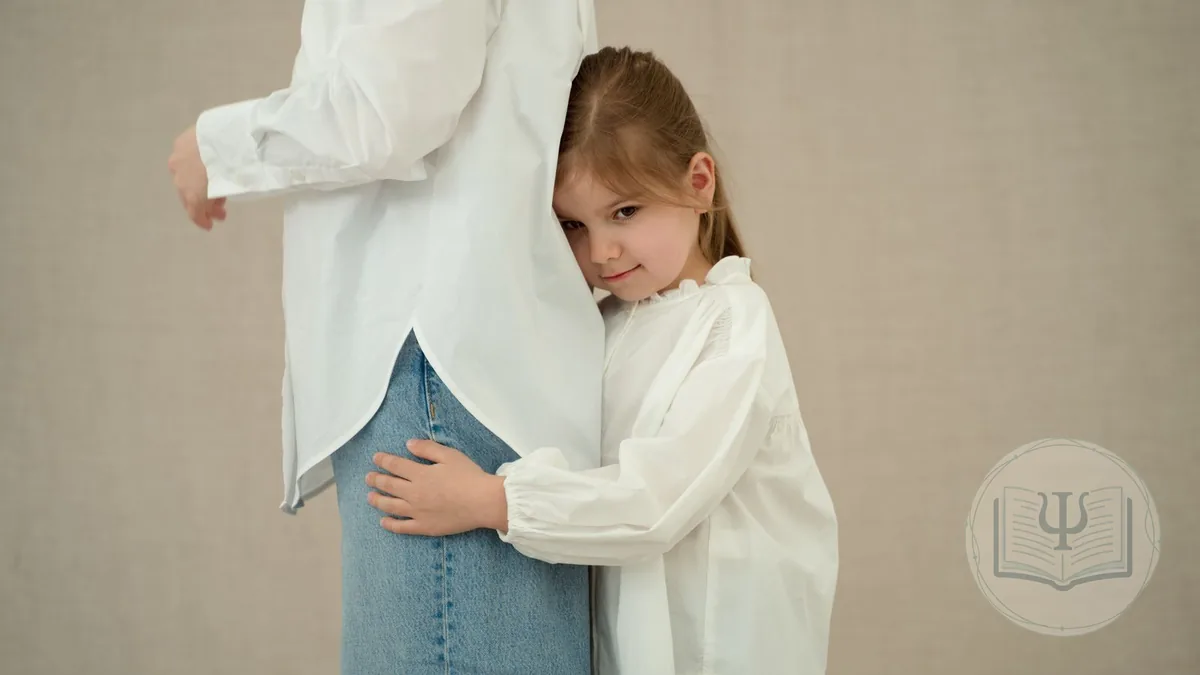
Lucy is five, and at home she never stops talking: she sings, argues with her brother and gives a blow-by-blow account of what happened at break time. At school she hasn’t said a single word since September. Not to her teacher, not to the other children, not to the lunchtime supervisor. She points, nods, and sometimes freezes and stares at the floor. At the first parents’ meeting her mother was told that she is “just very shy” and will grow out of it. By the time the family reaches your practice, five months have gone by, and in the waiting room Lucy looks at you, presses herself against her father’s leg and doesn’t speak to you either. What she has has a name, and it responds better the earlier it is recognised: selective mutism.
This guide is written for psychologists who see children in their practice. It covers what selective mutism is and what it isn’t, how it shows up at home and at school, the diagnostic criteria, what it gets confused with, how to assess a child who isn’t going to talk to you, what treatment looks like step by step, and how to involve the family and the school without anyone putting pressure on the child.
What is selective mutism?
The APA Dictionary of Psychology defines it as a rare disorder, most commonly but not exclusively found in young children, in which the person persistently fails to speak in certain social situations (school being the most common) despite being able to speak and to understand spoken language. It used to be called elective mutism, a name that was dropped precisely because it suggested that the child chooses to stay silent. Today DSM-5 and DSM-5-TR classify it under the anxiety disorders.
The MedlinePlus medical encyclopedia places the onset usually between the ages of 3 and 6 and sums up what most experts believe about its origin: these children inherit a tendency to be anxious and inhibited, and many have a family history of extreme shyness, anxiety disorders or selective mutism itself. The exact cause is unknown. The NHS estimates that it affects about 1 in 140 young children and that it is more common in girls and in children who have recently migrated from their country of birth.
The defining feature is the contrast. The same child who talks normally with their parents at home freezes the moment someone outside their circle of trust appears, or when they are expected to speak in a particular place. That freeze is not a decision. It is a fear response.
What it isn’t
Much of the work with these families is about undoing misunderstandings, and it helps to have them clear from the first interview:
- It isn’t choosing not to speak. The NHS explains it with an image that parents find very helpful: the expectation of talking to certain people triggers a freeze response, with anxiety and panic, and speaking becomes impossible in that moment.
- It isn’t just shyness. Plenty of shy children take a while to warm up, but they end up talking once they feel comfortable. In selective mutism the silence lasts for months in the same setting and limits the child’s life.
- It isn’t defiance or rudeness. From the outside the child can look rude, sulky or uninterested. On the inside they are frozen.
- It isn’t total mutism. A child with selective mutism does speak, sometimes a lot, in the places where they feel safe. If they stop speaking everywhere, it is a different picture and needs a different kind of assessment.
Signs of selective mutism at home, at school and in the session
The signs make more sense when you look at each setting, because the difference between them is exactly what gives it away.
- At home, with parents and siblings, the child speaks freely. They may not speak in front of visitors, grandparents they rarely see or the neighbour across the landing. Many parents describe tantrums or anger after school, as if the child were letting out all the tension of the day.
- At school there is a sudden stillness and a blank face as soon as they are expected to speak. They avoid eye contact, go stiff or move awkwardly. The more confident ones communicate with gestures (nodding, pointing); others avoid any form of communication at all. Some manage to whisper or speak in an altered voice.
- In your session, the usual thing is that they won’t speak to you, especially at the start. They may whisper to their mother or father if they think you can’t hear.
Some practical signs rarely get asked about and matter a great deal. The NHS warns that some children don’t ask to use the toilet all day and end up having accidents or urinary infections from holding on, and that others stop eating or drinking at school so that they won’t need to ask to leave the room. It is also common for them not to ask questions in class, which shows up in their homework.
Diagnostic criteria for selective mutism
The DSM-5-TR criteria, as summarised by the American Speech-Language-Hearing Association in its clinical practice portal, are:
- The child consistently fails to speak in specific social situations in which there is an expectation for speaking (for example, at school), despite speaking in other situations.
- The silence interferes with educational (or, in adults, occupational) achievement or with social communication.
- It lasts at least one month, and that month can’t simply be the first month of school. The NHS talks about two months when the child has just started in a new setting.
- It isn’t explained by a lack of knowledge of, or comfort with, the language spoken in that situation.
- It isn’t better explained by a communication disorder, such as childhood-onset fluency disorder, and doesn’t occur only during autism spectrum disorder, schizophrenia or another psychotic disorder.
There is no test that confirms it. The diagnosis rests on the child’s history, information from home and school, and observation. That is why the interview and gathering data from several sources carry so much weight.
Differential diagnosis
Before talking about selective mutism you need to rule out other explanations, and sometimes accept that they coexist, because they are not mutually exclusive.
Selective mutism or shyness?
Shyness is a trait, not a disorder. In practice the difference lies in how long it lasts, how much it gets in the way, and the fact that a shy child, given time and a friendly environment, does end up speaking. If after several weeks in the same group they still haven’t said anything to anyone, it is no longer shyness.
Children learning a new language
A child who has just arrived from another country may go through a silent period while learning the language of the school, and that is normal. MedlinePlus stresses the need to take these cultural factors into account. What points towards selective mutism is a child who doesn’t speak their own language outside the home either, or whose silence continues once they understand and can get by in the new language.
Selective mutism and autism spectrum disorder
A child can have selective mutism and also be autistic, but they are two separate conditions. In autism, the social communication difficulties appear in every setting, including at home, alongside other features such as restricted interests, repetitive behaviour or sensory differences. If you are unsure, our guide to autism spectrum disorder walks through the assessment.
Language, speech and hearing difficulties
A language disorder, a speech sound difficulty or hearing loss make speaking in front of others even more stressful, and sometimes they coexist with mutism. It is worth asking about hearing checks and, if there is any doubt, requesting a speech and language therapy assessment.
Mutism after trauma
When a child suddenly stops talking in places where they used to talk without any problem, the pattern is different and you need to explore whether they have been through something traumatic. MedlinePlus notes that people who have experienced trauma can show some of the same symptoms.
How to assess selective mutism
An assessment of selective mutism almost always starts without the child in the room. A first interview with the parents alone lets them speak freely about their worries and keeps the child out of a situation where they are expected to talk. In that interview it is worth covering:
- Language development and whether there were ever doubts about hearing.
- When it started, whether it began with nursery or school, and whether there have been changes (a house move, a separation, another language).
- Family history of anxiety, marked shyness or mutism.
- Other fears: of separating, of making mistakes, of drawing attention.
- What has been tried so far and what happened (rewards for speaking, insisting, punishments, leaving it be).
The who, where and what map
The most useful tool in the assessment is a map of the child’s communication. ASHA frames it around three factors that can trigger the silence: the person, the place and the activity. With the parents you fill in who the child talks to, who they only whisper or gesture to, and who they don’t communicate with at all; in which places (home, the car, the park, grandparents’ house, the classroom, the playground) and during which activities (playing, reading aloud, answering a question, asking for something). That map becomes the basis of the exposure ladder you will build later.
Information from school is essential. A questionnaire or an interview with the class teacher about how the child joins in, whether they gesture, whether they use the toilet and whether they eat gives you data you will never see in your room. A video recorded by the parents at home, with the child speaking normally, lets you get to know their voice, language and way of expressing themselves without forcing anything in the session.
The first session with a child who doesn’t speak
Assume the child won’t speak to you. The NHS is clear that the clinician should be prepared for this and willing to find another way to communicate. A few approaches that work:
- Take the pressure off their voice. Don’t ask “what’s your name?” or “how old are you?”. Those are exactly the questions the child dreads.
- Use comments instead of questions. “That’s a really tall tower you’re building” invites without demanding an answer.
- Accept any channel. Gestures, pointing, a whiteboard, drawing, moving counters. Communicating without words is already a step.
- Play first. Play therapy gives the child a safe space where their voice either comes on its own or doesn’t, without anyone asking for it.
- Let the parents be the bridge. If the child whispers to their mother, don’t lean in to listen and don’t comment on it. That whisper is the foundation of the treatment.
- Don’t celebrate the first word. If they say something, respond naturally, the way you would with any child. A “you talked!” in front of everyone sends them back to square one.
Treatment for selective mutism
The principle behind treatment for selective mutism comes down to one idea that is worth explaining carefully to the family: the goal is not to get the child to speak, but to lower the anxiety that stops them speaking. The NHS describes it as a gradual journey that starts by removing all pressure and moves from feeling relaxed at school to saying single words and sentences to one person, and finally to speaking freely to everyone, everywhere.
The techniques with the most support come from behavioural therapy and cognitive behavioural therapy. With younger children the weight is on behavioural techniques and the environment; with older ones you can add work on thoughts and plan the steps together. In practice they are usually combined.
The exposure ladder for selective mutism
Using the map from the assessment, the situations are ranked from easiest to hardest and you agree where to start. An example for a child who talks to their parents at home and to nobody else:
- Talking to their mother in the car, parked outside the school gate.
- Talking to their mother in the empty classroom after lessons.
- Doing the same with the teacher in the corridor, without looking.
- Saying one word to the teacher during a game.
- Answering the teacher with short sentences.
- Talking in front of one classmate, then a small group.
Each step is repeated until it feels easy, and only then do you move up. Graded exposure works because anxiety drops with repetition, and the child builds up evidence that speaking doesn’t lead to what they feared.
Stimulus fading
Stimulus fading (also known as the sliding-in technique) is probably the most characteristic technique. The child talks comfortably with someone they trust, such as their mother, in a place where nobody else is around. Gradually another person is brought in: first they enter the room without taking part, then they come closer, then they join the game, and once the child is talking in their presence, the mother withdraws. The new person can bring in others in the same way.
Shaping and reinforcement
Shaping means reinforcing any response that gets a little closer to speaking: first gestures, then eye contact, then sounds, short words, sentences and finally conversation. Reinforcement has a trap that parents and teachers need to understand: if the child is pressed to speak and then let off the hook, the relief they feel strengthens the silence. Responding warmly to any form of communication and not rescuing the child straight away breaks that cycle.
Desensitisation with voice recordings
Many children find it hard for others to hear their voice. Recordings let you make progress indirectly: the teacher listens to an audio clip the child recorded at home, then the child hears the teacher listening to it, and later on the child replies to a voice message. The NHS also suggests letting children listen to or watch themselves speaking in videos recorded at home.
If you use tasks between sessions to practise the steps with the family, our guide to therapy homework assignments covers how to set and review them so that they actually get done.
What to do at home: guidance for families
The family is the first ally and, without meaning to, sometimes the one keeping the problem going. These guidelines, very much in line with the NHS advice, usually help:
- Don’t pressure or bribe the child to speak. Don’t punish the silence either.
- Tell them you understand that speaking feels scary and that they will do it when they are ready, in small steps.
- Don’t answer for them automatically. Waiting a few seconds gives them the chance to try.
- Don’t praise them in public when they speak. Wait until you are alone and acknowledge the effort.
- Accept smiling, waving or pointing in the meantime.
- Don’t avoid parties or visits: prepare beforehand what the situation will be like so they can take part in their own way.
When the parents are separated, both of them need to know the plan and apply the same guidelines in their own homes. If one insists and the other rescues, the child receives mixed messages.
School as part of the treatment
Selective mutism shows most at school, so that is where much of the treatment happens. The NHS points out that when the family and the school work together to reduce the child’s anxiety, individual treatment can often be avoided. In practice, the coordination usually includes:
- A key person at school (the class teacher, the school’s special needs coordinator) with whom the child takes the first steps.
- Ways of joining in that don’t require speaking at first: cards, raising a hand, written answers.
- An agreed signal for going to the toilet and reassurance that they can eat and drink without asking permission.
- Adapted oral assessments while treatment lasts, so their marks don’t depend on their voice.
- Not making them read aloud or come up to the board in front of the class until that step comes up on the ladder.
Speech and language therapy plays an important role, and not only when there are language difficulties. ASHA describes the speech-language pathologist as a member of the team who works with the school and with mental health professionals. If you work together in the same practice, our article on software for speech therapists explains how to share schedules and clients without duplicate records.
Is medication needed?
For most young children, no. The NHS is clear: medication is mainly appropriate for older children, teenagers and adults whose anxiety has led to depression or other problems, and it should never replace changes to the environment or behavioural treatment. MedlinePlus mentions that some medicines for anxiety and social phobia have been used safely and effectively. Either way, the decision belongs to child psychiatry, and the psychological work carries on alongside it.
Outlook: why you shouldn’t wait
With the right support, most children overcome selective mutism. But the NHS adds two points worth passing on to families. First, the older the child is when it is diagnosed, the longer treatment takes. Second, left untreated it can persist into adolescence and adulthood and lead to isolation, low self-esteem and social anxiety disorder. That is why “they’ll grow out of it” and “they’re just very shy” shouldn’t be accepted when the silence has lasted for months.
How things go depends on how long the problem has been there, whether there are other communication or learning difficulties and, above all, on how well the family, the school and the practice work together.
How to document a selective mutism case
A case of selective mutism involves a lot of people and moves forward in small steps. Documenting it well means nothing gets lost between sessions:
- The initial who, where and what map, dated, so you can compare it a few months later.
- The exposure ladder and every step achieved, with whom and in what setting.
- Meetings with the school and what was agreed (toilet, assessments, key person).
- The guidance given to the family and how it is being applied in each home.
- The informed consent, signed by whoever is required given the parents’ situation, and permission to liaise with the school and other professionals.
Selective mutism in your practice with My Psico Agenda
My Psico Agenda doesn’t assess or treat anyone: that is your job. What it does is take work off your plate around a child case like this one, and there is plenty of it:
- The record belongs to the child. You tick “Minor patient?” and the “Minor’s mother and father” block appears, with each parent’s name and their ID number if you have it.
- Consent with both signatures. Under “Who signs?” you choose “The mother and the father (each with their own signature)”: one parent can sign in the session and the other with their own link from their phone.
- Invoices to the right person. Under “Invoices addressed to” you choose the mother, the father or “Split 50/50”, and the app prepares two draft invoices, one for each parent, with half of each session.
- Guidance the family can reach. In “Patient files” you upload the exposure ladder or the guidance for home and school. Everything starts hidden; when you tap “Hidden” it becomes “Visible” and the family finds it in their own space, in the “Documents” tab. When they open it, the record shows “Seen” with the date.
- Clinical notes with every step. In each session note you record the map, the ladder and what has been achieved.
- The same time every week. With “Recurring therapy” you keep the child’s regular slot booked, and the family gets a WhatsApp reminder 24 hours before, on the phone number saved in the record, with buttons to confirm or cancel.
If you see a lot of children, our article on software for child psychologists covers everything a children’s practice needs from its software. Individual plans start at €4.99/month + VAT (Semilla plan, up to 25 patients) and centre plans at €99.99/month + VAT. No lock-in: cancel whenever you like.
Frequently asked questions
The questions families and professionals ask most often about selective mutism.
What is selective mutism?
It is an anxiety disorder, almost always starting in childhood, in which a child consistently doesn’t speak in certain social situations, such as school, even though they can speak and talk normally in others, for example with their family at home. They are not choosing to stay silent: the expectation of speaking triggers a fear-driven freeze.
Is it the same as shyness?
No. A shy child takes time to feel comfortable but ends up talking. In selective mutism the silence lasts for months in the same setting, doesn’t improve on its own with time and limits the child’s life at school and with other children. To be called selective mutism it has to last at least a month that isn’t simply the first month of school.
At what age does selective mutism start?
It usually starts in early childhood, typically between the ages of 2 and 6, and is often noticed when the child starts nursery or school, which is when they have to talk to people outside the family. It can also be diagnosed later, even in adults.
How is selective mutism treated?
With behavioural and cognitive behavioural therapy focused on lowering anxiety rather than forcing the child to speak. A ladder of situations is built from easiest to hardest, and techniques such as graded exposure, stimulus fading, shaping and voice recordings are used. The family and the school take part in the treatment.
Will they grow out of it?
It isn’t a good idea to wait. With the right support most children overcome it, but the older they are when it is diagnosed, the longer treatment takes. Without intervention it can persist into adolescence or adulthood and lead to isolation, low self-esteem and social anxiety.
Can a child who is learning a new language have selective mutism?
Yes, but it shouldn’t be confused with the normal silent period of someone learning a new language. If the child doesn’t speak because they don’t yet know the language well enough, it isn’t selective mutism. It is more suspicious if they don’t speak their own language outside the home either, or if they still don’t speak once they understand and can get by in the new one.
What should I do if the child doesn’t speak to me in the first session?
That is to be expected. Start with an interview with the parents alone, ask for a video of the child talking at home and, in the session, take all the pressure off: play, use comments instead of questions and accept gestures, drawings or pointing. If they whisper to their mother or father, don’t comment on it or try to listen in.