 My Psico Agenda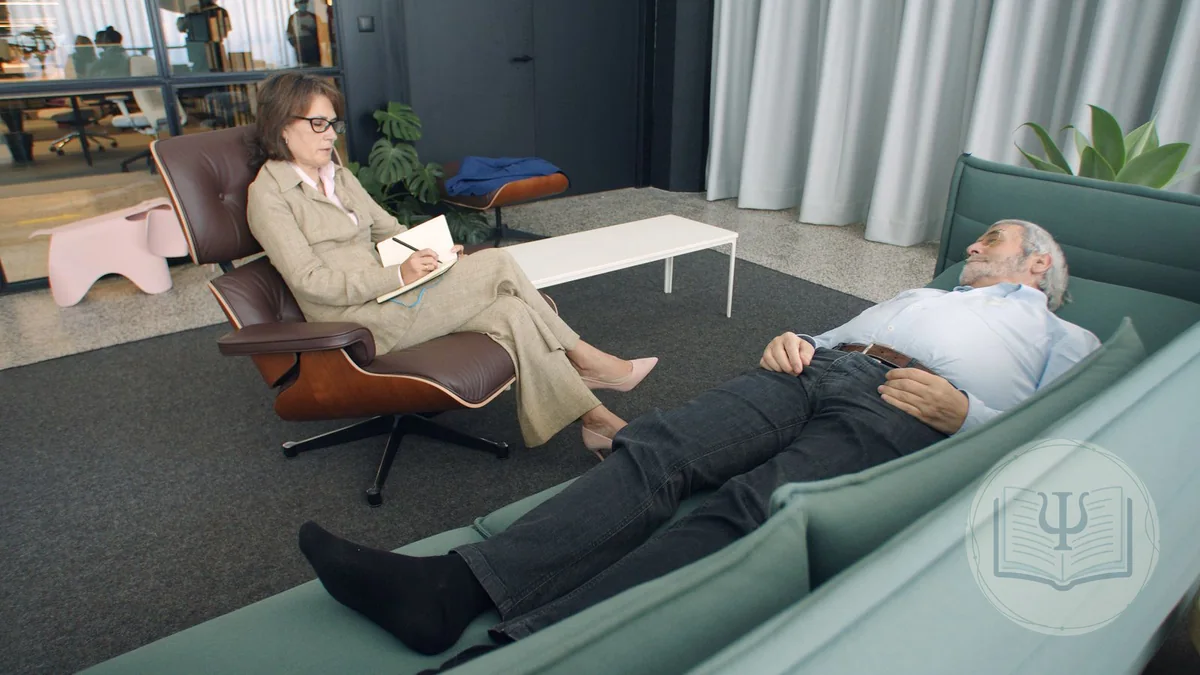
Monday, Wednesday and Thursday at 7:15 pm. For four years now, the same person has rung the bell at that time, lain down on the couch and started talking. Anyone who works as a psychoanalyst knows that this regularity is part of the treatment: the day, the time, the fee and what happens when someone misses a session. Software for psychoanalysts is not going to interpret anything for you, and it shouldn't try. What it can do is hold that frame in place so that scheduling, notes and payments don't eat into the analytic work.
Psychoanalysis, the method Sigmund Freud began to develop at the end of the nineteenth century (the Wikipedia entry gives a good overview of its history and schools), is still very much alive in consulting rooms. The International Psychoanalytical Association describes it as both a clinical treatment method and an experiential study of the mind, built on what analyst and analysand go through moment to moment. That way of working leaves a very specific mark on practice management: few patients, many sessions per patient, treatments that last years and a level of confidentiality that leaves no room for slips. This guide looks at what a psychoanalytic practice really needs from its management software, with a checklist at the end to help you choose.
What software for psychoanalysts needs (and what it can do without)
Whether you call it software or a practice management system for psychoanalysts, it is basically a tool that covers the diary, patient records, clinical notes and invoicing. What changes is how much weight each part carries. In a psychoanalysis or psychoanalytic psychotherapy practice, five of them do almost all the work:
- A diary that copes with high frequency: from one to four or five sessions a week per patient, depending on the school and the frame, for years.
- Notes that stay inside your practice, kept apart from the admin side and protected as the health data they are.
- A written frame: times, fees, missed sessions and holidays, signed at the start.
- Tidy payments, per session or per month, with a proper invoice and no spreadsheets on the side.
- A reliable session count over a long treatment: how many sessions so far, how often the patient comes and when the last one was.
What it can do without is just as clear. A psychoanalyst has no use for marketing funnels, automatic "how are you feeling today?" messages or features that intrude on the relationship with the patient. Good software barely shows: it is there when you open it and it stays out of the way once the consulting room door is closed.
A diary for psychoanalysts: three sessions a week for years
With four or five analysands at high frequency, the week fills up quickly and almost always in the same slots. Scheduling software for psychoanalysts has to show you that week at a glance and let you book each session without typing the same details again and again.
In My Psico Agenda, when you pick the patient for a new appointment, the length, the price and the therapy type are copied from their last appointment. If the previous one was a 45-minute session at €70 classed as "Psychoanalysis", the new one comes out the same and you only change the day and time. The week view draws each appointment with its real length and end time, and if you try to put someone on top of another session, the app warns you that the slot is already taken.
The hours you keep for yourself count too: your own analysis, your supervision sessions, the Tuesday seminar. Those slots are set as blocks, either for a single day or repeated every week, and they disappear from the free slots the patient sees in their own space. One difference is worth knowing from the start: blocks repeat on their own, while patient sessions are created one by one (with their details already copied, though).
45-minute, 30-minute and double sessions
Each appointment can last 30 minutes, 45, one hour, an hour and a half or two hours. That covers the classic 45-minute session, the 30-minute one and the double session; for a 50-minute session, you book the hour. If you work with variable-length sessions, the practical approach is to book your usual slot: the diary protects that time and you decide when the session ends in the room, not the software.
The psychoanalytic frame, in writing from the first session
The frame is the least visible part of the treatment and the one that holds the most: fixed days and times, fees, what happens with missed sessions and how the analyst's and the patient's holidays are handled. The clearer it is at the start, the fewer misunderstandings later. If you want to review what to include, we have a guide on the therapeutic frame and the patient contract.
The cleanest way to put it in writing is inside the informed consent. In My Psico Agenda you can edit the wording of the clauses, so you can add your policy on missed sessions or holidays just as you explain it in the preliminary interviews. The patient signs it in the room or remotely through a link, and the signed PDF is stored in their record. If the patient is a minor, the document collects their guardian's details.
Missed sessions and the analyst's holidays
In many psychoanalytic practices a missed session is paid for, because that time was set aside for the patient. Others are more flexible. The rule is yours; what the software has to do is keep a record. In the diary you mark what happened to that appointment and, if you decide to charge it, you issue the invoice yourself, either from the sessions or as a blank invoice with whatever description you want. For your holidays, you block those days and nobody can request a slot in them from their patient space. You will find ideas for wording the rule in our guide to a cancellation policy for your practice.
Reminders in psychoanalysis: yes or no?
There is no consensus here, and that makes sense. For many analysts, remembering the session is part of the patient's work, and an automatic message the day before gets in the way. Others use them with particular patients: a teenager, someone going through a very disorganised period, a patient who has just changed times. The sensible thing is for the software to let you decide patient by patient.
In My Psico Agenda, automatic WhatsApp reminders go out 24 hours before (and, if you like, also when the appointment is created), with buttons to confirm or cancel. You can switch them off in a single patient's record without touching anyone else. And if you would rather tell someone about a one-off change yourself, the manual reminder opens WhatsApp with the message already written and you just press send; manual reminders are unlimited on every plan.
Session notes and clinical records in psychoanalysis
Analysts write a lot, but not everything goes to the same place. There are process notes, which are almost a personal notebook; there is what you have to keep as the clinical record; and there is the admin data. Mixing it all in one notebook is awkward, and leaving it in loose files on your computer is risky.
Each patient's record holds the clinical history, attached files (a referral letter, a scanned document) and signed consent forms. Every appointment also has its own session notes field, so what you write on a Tuesday stays tied to that Tuesday. If you need to hand over or file a summary, the record can be exported as a PDF with the fields you choose, plus the list of completed sessions at the end if you want it. Our guide to session note templates may help you shape your notes, although many analysts prefer free-form writing.
Custom fields for a psychoanalytic practice
The standard record asks for name, ID number, phone and email. An analyst is guided by other information, and the software should have room for it. In My Psico Agenda you can create your own fields of seven types (short or long text, number, date, yes or no, list and multiple choice) and make them mandatory. A few examples that make sense in psychoanalysis:
- Start of analysis, as a date field.
- Agreed frequency, as a list: one, two, three or four sessions a week.
- Setting, as a list: couch or face to face.
- Referred by, as short text.
- Agreed fee, as a number, useful if you review it from time to time.
The fields show up in all your patient records. If you also see patients who are not in analysis, leave them optional.
How many sessions so far: tracking a treatment that lasts years
How many sessions has it been? Has the frequency dropped since the summer? When did they last come? In a long analysis these questions come up, and answering them by hand with a calendar is tedious.
When you open or create an appointment, the number of that session appears in grey next to the patient's name, for example "(Appointment no. 212)", counting their earlier therapy sessions that were not cancelled. Each patient's statistics show sessions and hours, attendance, days since the last session, the average interval between sessions and the next appointment, and you can filter them by date: today, this month, this year or any range you choose. If you tag sessions with the "Psychoanalysis" therapy type, one of the 17 approaches on the list, the overall statistics keep that work separate from the rest.
Getting paid in psychoanalysis: per session, per month or with session packs
Some analysts take payment after each session and others bill at the end of the month. Both work if the software makes it easy. In My Psico Agenda every session stores its price and whether it has been paid, and the invoice is generated from the completed sessions, with your own series, consecutive numbering, and the healthcare VAT exemption and Spanish IRPF withholding where they apply. If you bill monthly, you gather that patient's sessions for the month into a single invoice.
For patients who prefer to pay in advance there are session packs. Invoicing is also ready for VeriFactu, the Spanish Tax Agency's system arriving in 2027, so you won't have to switch software when it becomes mandatory.
Confidentiality: what a psychoanalyst cannot delegate
What is said on the couch is about as private as it gets, and the GDPR treats it as a special category of data: health data. Article 9 of the GDPR sets out the conditions for processing it, and it is worth reading at least once. The software doesn't take the responsibility off your hands (you decide what you write down and how long you keep it), but it can make life hard for anyone curious.
In My Psico Agenda data is stored encrypted on servers in the European Union, with a daily backup. You can turn on two-step verification to log in and a PIN that locks the sensitive sections inside the app, which helps if someone else uses your computer. You will find the details on our security page and a full guide to GDPR in a psychology practice.
Online psychoanalysis and working in another time zone
Many practices now combine in-person sessions with video sessions, especially when a patient moves or travels for work and the analysis shouldn't stop. My Psico Agenda doesn't include video calls: you hold the session on the platform you already use, and the appointment, the reminder, the note and the invoice stay in the diary just like an in-person session.
If you practise from the Canary Islands or from outside Spain, you choose your time zone in the settings, and the diary, the reminders and the patient space all run on your local time. And if you work with a centre as well as running your own practice, a single account keeps the patients, rooms, schedules and invoicing of each workplace separate.
Software for psychoanalytic institutes and centres
Psychoanalytic institutes and psychotherapy centres with several analysts have other needs: several people's diaries, shared rooms, fee splitting and a management team that needs to see the activity without reading what isn't theirs to read. The centre plan in My Psico Agenda gives each professional their own diary, as if they worked independently, and gives management a dashboard with live diaries, room management so that two patients never end up in the same room, commissions and VeriFactu invoicing for the centre and for each therapist, without intruding on professional confidentiality.
The indicators show, among other things, revenue by therapy type, so a centre with a psychoanalytic line and other approaches can see how much each one brings in. Practice Mini costs €124.99/month + VAT for up to 5 therapists, and Practice Super €199.99/month + VAT for up to 15. There is more detail on the software for psychology practices page.
How to choose software for psychoanalysts: a checklist
Before you decide, try the software with your real week rather than the demo, and go through these questions:
- Can I book a high-frequency patient's sessions without filling in the same details every time?
- Can I block my own analysis, supervision and seminar hours every week?
- Do the session lengths it offers fit my sessions?
- Can I switch off reminders for a single patient?
- Can I write my frame into the consent form and have the patient sign it remotely?
- Do I get per-session notes as well as the clinical history?
- Can I see how many sessions each patient has had and how often they come?
- Can I invoice per session and per month, and is it ready for VeriFactu?
- Where are the servers, is the data encrypted and is there two-step verification?
- Can I leave whenever I want, with no minimum contract? What can I download if I leave (records, invoices, reports)?
If you want to compare against more criteria, our guide to choosing software for psychotherapists has its own list, and the software for psychologists page sums up everything the diary includes.
My Psico Agenda as software for psychoanalysts
My Psico Agenda isn't built only for psychoanalysis, and we won't sell it to you that way. It is a diary and software for psychologists and therapists that fits a psychoanalytic practice because it is plain, leaves out what you don't ask for and takes care of the admin. In short:
- A diary in the browser and on your phone, with working hours, weekly blocks and a personal space for each patient.
- Length, price and therapy type copied from the last appointment, and the session number always in view.
- Clinical history, per-session notes, files, custom fields and a record you can export as a PDF.
- Editable consent form, signed in the room or through a link.
- WhatsApp reminders you can switch off patient by patient.
- Statistics per patient and per therapy type.
- Invoicing from sessions, session packs and VeriFactu readiness.
An analyst with a few high-frequency patients can start on the Semilla plan, which costs €4.99/month + VAT and includes up to 25 patients, 20 automatic reminders and 20 VeriFactu invoices a month; if you invoice each patient once a month, that covers 20 of them. Júnior (€19.99) and Sénior (€29.99) remove the patient limit and add more reminders, invoices and storage; everything is on the pricing page. The first month is free, with no card and no minimum contract.
Frequently asked questions about software for psychoanalysts
The questions that come up most often when a psychoanalytic practice looks for management software.
What is software for psychoanalysts?
It is practice management software (diary, patient records, clinical notes, reminders and invoicing) that fits the way a psychoanalyst works: few patients, many sessions per patient, long treatments and a stable frame. It doesn't have to be built only for psychoanalysis. What matters is that it handles high frequency well, protects your notes and lets you decide things like reminders patient by patient.
Can I schedule each week's fixed sessions in one go?
Patient sessions are created one by one, but it takes very little: when you pick the patient, the length, price and therapy type are filled in from their last appointment and you only set the day and time. What does repeat every week are blocks, which you can use to reserve your own analysis, supervision or seminar hours so that nobody requests those slots.
Do I have to send reminders to my patients?
No. Automatic WhatsApp reminders are something you turn on if you want, and you can switch them off in each patient's record. Many analysts prefer not to send them, because remembering the session is part of the patient's work; others only use them in specific cases. If you ever need to let someone know about a change, the manual reminder opens WhatsApp with the message ready to go.
How do I record and charge a session the patient missed?
You set the rule, and it is best to have it in writing as part of the frame; in My Psico Agenda you can add it to the consent clauses the patient signs. In the diary you mark what happened to that appointment and, if you charge it, you issue the invoice from the sessions or as a blank invoice with the description you prefer.
Is it safe to keep notes from an analysis in online software?
It depends on the software, so always ask where the servers are and how the data is protected. In My Psico Agenda information is stored encrypted on servers in the European Union, with a daily backup, and you can add two-step verification and a PIN for the sensitive sections. Each session's notes stay inside the appointment and the patient's record, not in loose files.
Does it work for a psychoanalytic institute with several analysts?
Yes, with the centre plan. Each analyst has their own diary and management sees the live diaries, rooms, commissions, invoicing and indicators, including revenue by therapy type, without intruding on professional confidentiality. Practice Mini is for up to 5 therapists (€124.99/month + VAT) and Practice Super for up to 15 (€199.99/month + VAT).
How much does software for psychoanalysts like My Psico Agenda cost?
The Semilla plan costs €4.99/month + VAT for up to 25 patients, enough for many psychoanalytic practices. Júnior (€19.99) and Sénior (€29.99) have no patient limit. All plans are paid monthly with no minimum contract, and the first month is free with no card required.