 My Psico Agenda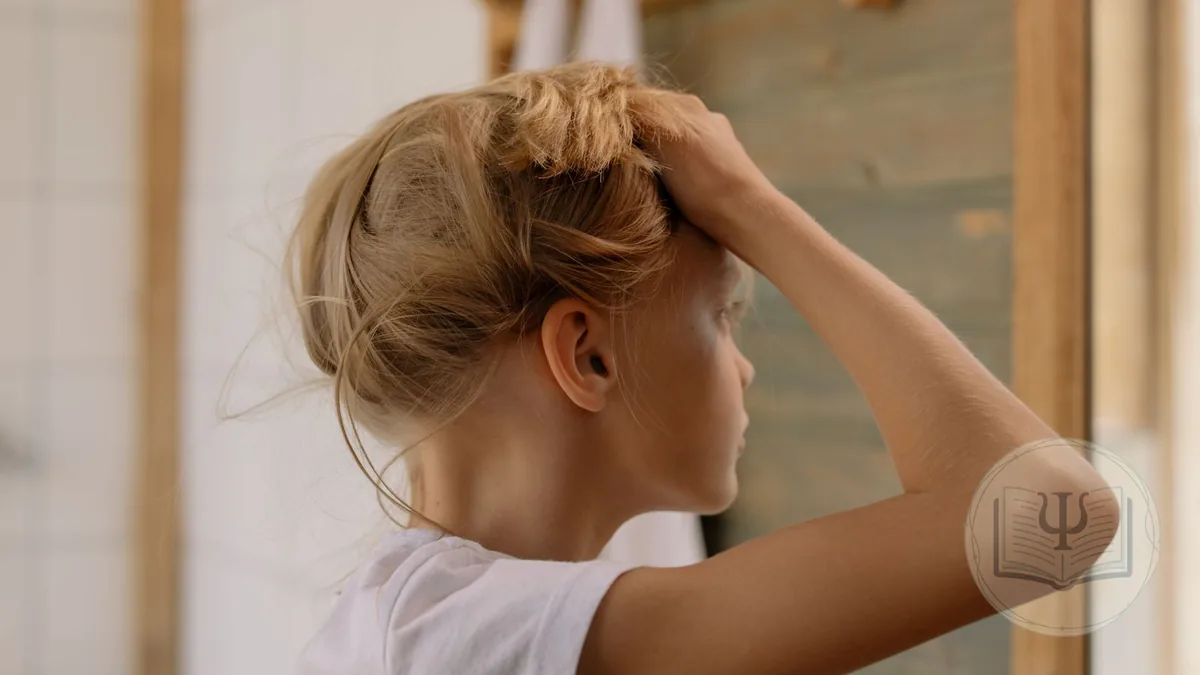
Lucía is 15 and comes to her first session with her mother and a high ponytail that covers the crown of her head. A year ago she started pulling out her hair while she studied: one hair, then another, almost without noticing. Now it also happens in bed, on her phone, and sometimes she does it on purpose, looking for the thicker hairs because they "feel different". She didn't go to the pool once this summer. Her mother has tried telling her off, hiding her tweezers and making her wear a hat to bed, and at home the subject has turned into a daily argument. What Lucía has has a name, trichotillomania, and it can be treated.
This guide is written for psychologists who see it in their practice, and also for patients and families looking for reliable information. It covers what trichotillomania is, how to recognise it, why it happens, how it is assessed and which treatment has the strongest evidence, with practical tips for everyday life.
What is trichotillomania?
Trichotillomania is a disorder in which a person pulls out their hair again and again, to the point that the hair loss shows. The APA Dictionary of Psychology defines it as the persistent pulling of hair from any part of the body where it grows, often with conspicuous hair loss, and adds that a growing sense of tension before the act and relief or satisfaction afterwards are common. It is also called hair-pulling disorder.
For years it was classed as an impulse-control disorder. Since DSM-5 it sits in the chapter on obsessive-compulsive and related disorders, alongside OCD, body dysmorphic disorder and excoriation (skin-picking) disorder. ICD-11 places it among the body-focused repetitive behaviour disorders, under code 6B25.0, and in the literature you will often see this group referred to as BFRBs (body-focused repetitive behaviors).
According to DSM-5-TR, five conditions have to be met to diagnose trichotillomania:
- Recurrent pulling out of one's hair, resulting in hair loss.
- Repeated attempts to decrease or stop it.
- Significant distress or impairment at school, at work, in relationships or in other important areas of life.
- It is not caused by another medical condition, such as a skin disease.
- It is not better explained by another mental disorder; for example, pulling hair to fix a flaw that only the person can see, as happens in body dysmorphic disorder.
Symptoms of trichotillomania
The core symptom is easy to describe: the person pulls out their hair repeatedly. What surrounds it is what gives you the clues in session.
- The areas. The most common is the scalp, especially the crown and the sides, but also eyebrows and eyelashes, beard, body hair or the pubic area.
- Irregular bald patches, often more noticeable on one side of the head than the other. Hair that grows back in those patches tends to feel coarse and bristly.
- Rituals. Choosing a particular hair for its thickness or texture, looking at the root, rolling it between the fingers or across the lips, chewing it.
- Tension before, relief after. Both are common, although not everyone notices them.
- Hiding it. Ponytails and buns that cover the patches, hats, eyebrow make-up, false eyelashes or wigs. And avoiding anything that might give it away: the hairdresser, the pool, the wind, intimacy.
- Shame, sometimes a lot of it. MedlinePlus notes that most people with trichotillomania also have sadness, anxiety or a poor self-image.
Pulling without noticing or on purpose
Research distinguishes two styles. In automatic pulling, the person pulls while doing something else, almost always something passive: studying, reading, watching a series, driving or scrolling on their phone in bed. They only realise afterwards, when they see the hairs on the desk. In focused pulling they are aware of it: they feel a strong urge or an emotion (anxiety, boredom, frustration) and pull to soothe it, sometimes with a very precise ritual.
Most people do both, like Lucía. Telling them apart matters because they call for different interventions: automatic pulling depends mostly on awareness training, while focused pulling also needs work on the urge and the emotion behind it.
Trichophagia: when the hair is eaten
Some people with trichotillomania chew or swallow the hair, which is known as trichophagia. It is not a minor detail. Hair cannot be digested and can form a ball in the stomach, a trichobezoar, that may end up blocking the bowel. MedlinePlus warns about this risk and about malnutrition. Always ask about it, calmly, because almost nobody mentions it unless asked. Stomach pain, nausea, vomiting or weight loss in someone who eats their hair are a reason to see a doctor without delay.
Causes of trichotillomania
There is no single known cause, and medical sources say so plainly. What we do know points to several factors that add up:
- Biological and family factors. It is more common in families where someone has trichotillomania or OCD, and the hormonal changes of puberty seem to play a part in when it starts.
- Emotion regulation. Pulling lowers tension, boredom or anxiety in the very short term. That instant relief is exactly what keeps the behavior going.
- Sensory factors. The texture of the hair, the feel of the root coming out, the coarse hair that "isn't right": for many people this part is pleasant or even necessary.
- Habit. With repetition it becomes automatic and gets linked to places (the bed, the desk), postures (a hand resting on the head) and activities (studying, driving) that end up working as triggers.
It also helps to say what it isn't. It is not self-harm in the sense of wanting to hurt oneself, even though the two are sometimes confused, and it has nothing to do with vanity or a "lack of willpower".
How common is it, and when does it start?
It is more common than it seems, partly because people hide it. DSM-5-TR estimates that 1% to 2% of adults and adolescents have it in any given year, and MedlinePlus puts the figure as high as 4% of the population. In adulthood it is far more common in women; in childhood, boys and girls are affected more evenly.
It usually begins around puberty, between the ages of 11 and 13 according to MedlinePlus. Left untreated it tends to follow a chronic course, with better and worse spells that line up with stressful periods: exams, a new school, a break-up, a new job.
Trichotillomania in children and teenagers
In young children, hair pulling can be a passing phase. MedlinePlus points out that trichotillomania in children under 6 may go away without treatment. At that age it looks more like thumb-sucking, a way of calming down or falling asleep, than the picture we see in adolescence. It is still worth mentioning to the paediatrician.
Adolescence is different. When it starts at 10 or 11 or later, it tends to persist without treatment, and it arrives just when appearance and other people's opinions matter most. With teenagers it helps to:
- See the young person on their own for part of the session. Many won't talk about the ritual, or about eating the hair, in front of their parents.
- Agree from the start what will and won't be shared with the family.
- Involve the parents as supporters of the treatment, not as guards.
- Talk to the school only if the teenager agrees, and about concrete things, such as being allowed to keep an object in their hands in class.
Our guide to therapy with teenagers covers setting and confidentiality at this age in more detail.
Not all hair loss is trichotillomania
Before talking about trichotillomania, other causes of hair loss need to be ruled out. Alopecia areata, scalp ringworm and other skin conditions can produce similar patches, so when in doubt a dermatology assessment is part of the process. A dermatologist will recognise the hairs broken at different lengths that pulling leaves behind and, in some cases, may ask for a biopsy.
On the psychological side, it should be told apart from:
- OCD. In obsessive-compulsive disorder, pulling would be a compulsion to neutralise an obsession (for example, making everything symmetrical). In trichotillomania there is no prior obsession to neutralise.
- Body dysmorphic disorder, when hair is pulled to correct a flaw that only the person sees, such as eyebrows they feel are uneven.
- Self-harm, where the intention is to hurt or punish oneself.
- Stereotyped movements in some neurodevelopmental conditions and, far more rarely, delusional beliefs about hair.
Trichotillomania also rarely comes alone. It often coexists with excoriation disorder, depression or anxiety disorders, and all of that needs exploring.
How to assess trichotillomania in your practice
The interview is the main tool. A few questions that open the topic without judgement:
- "When in the day does it happen most? Where are you and what are you doing?"
- "Do you notice while you're doing it, or afterwards?"
- "What do you feel just before? And just after?"
- "How do you choose the hair? Do you do anything with it once it's in your hand?"
- "What have you tried to stop, and what happened?"
- "What have you stopped doing because of this?"
From the answers you build a functional analysis: the antecedents (places, times, activities, emotions, postures), the behavior itself (areas, fingers or tweezers, the ritual) and the consequences (relief, a pleasant sensation and, afterwards, shame). That map is what guides treatment.
Self-monitoring each episode
From the first week, ask for a self-monitoring record: each episode with the time, the place, what they were doing, how they felt, the strength of the urge from 0 to 10, how long it lasted or how many hairs, and what they did afterwards. It is hard at first, especially for automatic pullers, and that in itself is useful information. Recording often reduces the behavior a little on its own, because it forces the person to notice. Our guide to therapy homework assignments has ideas for making sure the records actually get done.
Scales for measuring trichotillomania
To track progress with numbers:
- MGH-HPS (Massachusetts General Hospital Hairpulling Scale): seven self-report questions about the past week (urges, how much hair is pulled, how much control the person has and how distressing it is). Each item is scored from 0 to 4, so the total ranges from 0 to 28.
- NIMH-TSS, the NIMH Trichotillomania Severity Scale, rated by the clinician during the interview.
- MIST-A, which helps distinguish automatic from focused pulling in adults.
Giving the MGH-HPS at the start and every few weeks, together with the self-monitoring record, gives you a clear baseline. Before using any scale, check whether a validated version exists in your patient's language and what its terms of use are. Photos of the affected areas, always taken with consent and stored with the clinical record, help too: sometimes the patient won't believe the hair is growing back until they see it.
Trichotillomania treatment
The trichotillomania treatment with the strongest evidence is psychological, specifically a technique from cognitive behavioral therapy: habit reversal training. The UK's NHS offers it as the usual treatment, with medication playing a secondary role.
Habit reversal training
Azrin and Nunn described it in 1973 for tics and nervous habits, and it remains the backbone of treatment. It has three parts:
- Awareness training. Describing the behavior in detail, spotting the warning signs that come before it (the hand going up, the finger searching for a coarse hair, the urge) and recording every episode. For automatic pullers, this is half the treatment.
- Competing response. When the urge or the warning signs appear, doing something for at least a minute, or until the urge passes, that makes pulling physically impossible: clenching a fist, squeezing a stress ball, interlacing the fingers, sitting on the hands. It needs to be discreet, so it can be used in class or at work without anyone noticing.
- Social support. A trusted person who praises progress and, if agreed beforehand, gently points out when they see a hand in the hair. The agreement is what makes it work: an agreed reminder helps; criticism doesn't.
It is completed with stimulus control, meaning barriers in high-risk situations: plasters on the fingertips while studying, a hat or scarf while watching series, short or tied-back hair, taking the tweezers out of the bathroom, covering the magnifying mirror or dimming the bathroom light, where many people spend ages looking at themselves up close.
The ComB model: treatment tailored to the person
Because everyone pulls for different reasons, in 1997 Mansueto and colleagues proposed the ComB model (comprehensive behavioral model). It sorts triggers into five domains and looks for an answer to each:
- Sensory: the texture, the coarse hair. An object with a similar feel, such as a smooth stone or a soft brush, can meet that need.
- Cognitive: thoughts like "just one", "this hair is wrong" or "it doesn't matter now", which are worked on with cognitive restructuring.
- Affective: anxiety, boredom, frustration. This is where emotion regulation and breathing come in.
- Motor: the hand on the head, the posture while studying. Changing posture and keeping the hands busy.
- Place: the bed, the bathroom, the car. Changing the setting or putting barriers there.
The five domains are often remembered by the acronym SCAMP.
Acceptance and emotion regulation
When urges are very strong or tied to difficult emotions, versions of habit reversal enhanced with acceptance and commitment therapy or with dialectical behavior therapy skills have been tested, with good results in small studies. The idea is to learn to notice the urge without obeying it, like a wave that rises and falls on its own, and to have other ways of handling the emotion that don't involve the hair.
What about medication?
No medication is specifically approved for trichotillomania. The Cochrane review of drug treatments for trichotillomania pooled eight trials with 204 adults and concluded that no class of medication definitively demonstrates efficacy. Selective serotonin reuptake inhibitors showed no clear effect, and there was only preliminary evidence for clomipramine, N-acetylcysteine and olanzapine, each based on a single trial with very few participants. In practice, medication is a decision for psychiatry, especially when depression, anxiety or OCD are also present.
Relapse: plan for it
Urges can return months later, especially in stressful times. It is worth preparing for this before discharge: identify the highest-risk situations, keep the plan at hand (barriers, competing response, support person) and tell a lapse apart from a relapse. Pulling one afternoon during exams doesn't undo months of work. Spacing out the last sessions, rather than ending abruptly, helps consolidate what has been learned.
If your child is pulling out their hair
Watching your child pull out their hair is distressing, and the natural reaction is to try to stop it at all costs. These tips usually help more than watching over them:
- Don't scold or punish. It increases shame and the behavior goes into hiding, which is the opposite of what treatment needs.
- Don't monitor every move. If they want help, agree on a discreet signal for when you see their hand in their hair.
- Name it. Talking about trichotillomania openly takes the weight out of the secret.
- Make an appointment with the paediatrician or GP to rule out other causes of hair loss, and with a psychologist who has experience with these problems.
- Ask, without making a drama of it, whether they eat the hair. It is the only part that can have serious physical consequences.
- Praise the effort, not just the regrowth, which takes months to show.
How to stop pulling your hair: tips for everyday life
If you recognise yourself here, these strategies, many of them suggested by people who have been through it, tend to help while you start treatment:
- Write down when it happens for a week: where you were, what you were doing and how you felt. Two or three situations almost always repeat themselves.
- Put barriers in place at those moments: plasters on your fingers, a hat, your hair tied back or something in your hands.
- Keep your hands busy with a stress ball, modelling clay or a textured object.
- Change the setting. Study at a desk rather than in bed, and leave your phone outside the bedroom at night.
- Look after your hair. If what hooks you is coarse or different hair, cutting it or using conditioner takes away part of the pull.
- Tell someone you trust. Hiding it tends to increase anxiety, and anxiety increases the urge.
- Go easy on yourself after a slip. A bad day doesn't mean you are back at square one.
When to seek professional help
It is worth seeing a psychologist when pulling:
- Leaves visible bald patches or makes you lose eyebrows or eyelashes.
- Leads you to avoid the pool, the hairdresser, photos or intimacy.
- Takes up time every day, or you can't cut down however hard you try.
- Comes with sadness, anxiety or shame that isolates you.
- Comes with eating your hair, even occasionally.
How to document trichotillomania follow-up
Progress with trichotillomania is slow and comes in waves, and patients tend to focus on the bad days. So it helps to keep a written record of:
- The MGH-HPS score at the start and at each review, with the date.
- A weekly summary of the self-monitoring record: number of episodes, high-risk situations and urge strength.
- Each patient's ComB map and which competing responses and barriers work for them.
- Photos of the affected areas, if taken, with the date.
- Mood, anxiety, sleep and whether there is trichophagia.
- For minors, what has been agreed with the family and, where relevant, with the school.
Going over all of this with the patient after three or four months is often an intervention in itself: the improvement they can't see in the mirror, they can see in the numbers.
Trichotillomania in your practice with My Psico Agenda
My Psico Agenda doesn't assess or treat anyone: that's your job. What it does is organise everything around the treatment, which with trichotillomania is quite a lot:
- The minor's record, with their guardians. If the patient is a minor, you tick "Minor patient?" and the record stores "Guardian 1" and, if there is one, "Guardian 2", plus who the invoices are made out to. The informed consent for minors can be signed by the guardians, each with their own link or on your own device.
- The clinical record, session by session. In each session's private notes you log the MGH-HPS score, the ComB map and what is working, and you can see the progress without digging through paper.
- Your own fields in the record. Under "Additional data" you can add fields of your own, such as "Areas" with multiple choice (scalp, eyebrows, eyelashes) or "Baseline MGH-HPS" as a number. If you work in a centre, the centre can also add its own fields, shared across all its therapists' records.
- Self-monitoring in the patient's hands. You upload the template to "Patient files". It goes up as "Hidden"; when you switch it to "Visible", the patient finds it in their space under the "Documents" tab, and in the record you see "Seen" with the date they opened it. Follow-up photos stay in the same record, without the patient seeing them.
- A fixed slot every week. With "Recurring therapy" you book the patient's slot, and they get a WhatsApp reminder 24 hours before with buttons to confirm or cancel.
- Consistency, in numbers. In each patient's statistics you see "Total sessions", "Attendance" and "Cadence", which is very useful when you start spacing out sessions towards the end of treatment.
If you are starting out, the Semilla plan costs €4.99/month + VAT: up to 15 patients, clinical records with private notes per session and 20 automatic WhatsApp reminders a month. As your practice grows there is Júnior (€19.99) and Sénior (€29.99), and for centres, plans from €99.99/month + VAT. All of them come with a 1-month free trial, no card needed and no lock-in. Our software for psychologists page has everything that's included, and if you mostly work with children and teenagers, you may also like our article on software for child psychologists.
Frequently asked questions
The questions people ask most often about trichotillomania, in session and outside it.
What is trichotillomania?
It is a disorder in which a person repeatedly pulls out their hair, from the scalp, eyebrows, eyelashes or other areas, until the loss shows, and can't stop even though they try. Since DSM-5 it has been in the chapter on obsessive-compulsive and related disorders, and ICD-11 lists it among the body-focused repetitive behaviour disorders.
Why do I pull my hair when I'm nervous or bored?
Because pulling lowers tension, boredom or anxiety for a moment, and that instant relief reinforces the behavior. With repetition it becomes a habit that kicks in almost by itself in certain situations, such as studying, watching TV or lying in bed, sometimes without you noticing.
Can trichotillomania be cured?
Many people manage to greatly reduce or stop pulling with psychological treatment, especially habit reversal training. Left untreated it tends to be chronic and comes in waves, and urges can return in stressful periods, which is why treatment includes a relapse plan. In children under 6 it may go away without treatment.
What is the best treatment for trichotillomania?
The one with the strongest evidence is habit reversal training, a cognitive behavioral technique that combines awareness training, a response that is incompatible with pulling and the support of a trusted person, together with barriers in high-risk situations. No medication has been shown to be definitively effective.
Does hair grow back after trichotillomania?
In most cases it does once the pulling stops, although it takes months to show and may feel coarser at first. If the same area has been pulled for many years, the follicle can be damaged and the hair may stay thinner or not fully grow back, so it is worth having a dermatologist assess it.
Is it normal for a child to pull out their hair?
In young children it can be a way of calming down or falling asleep, similar to thumb-sucking, and it often goes away on its own. If it starts around puberty, leaves bald patches or lasts for months, it is worth seeing the paediatrician and a psychologist, without scolding or punishing the child.
What is the difference between trichotillomania and OCD?
Both are in the same DSM-5-TR chapter and sometimes occur in the same person. In OCD, the repetitive behavior is a compulsion to neutralise a specific obsession or distress; in trichotillomania there is no prior obsession, but rather an urge, a sensation or a habit that is soothed by pulling out hair.